Private by Design: Notes from a Privacy-First AI Hackathon
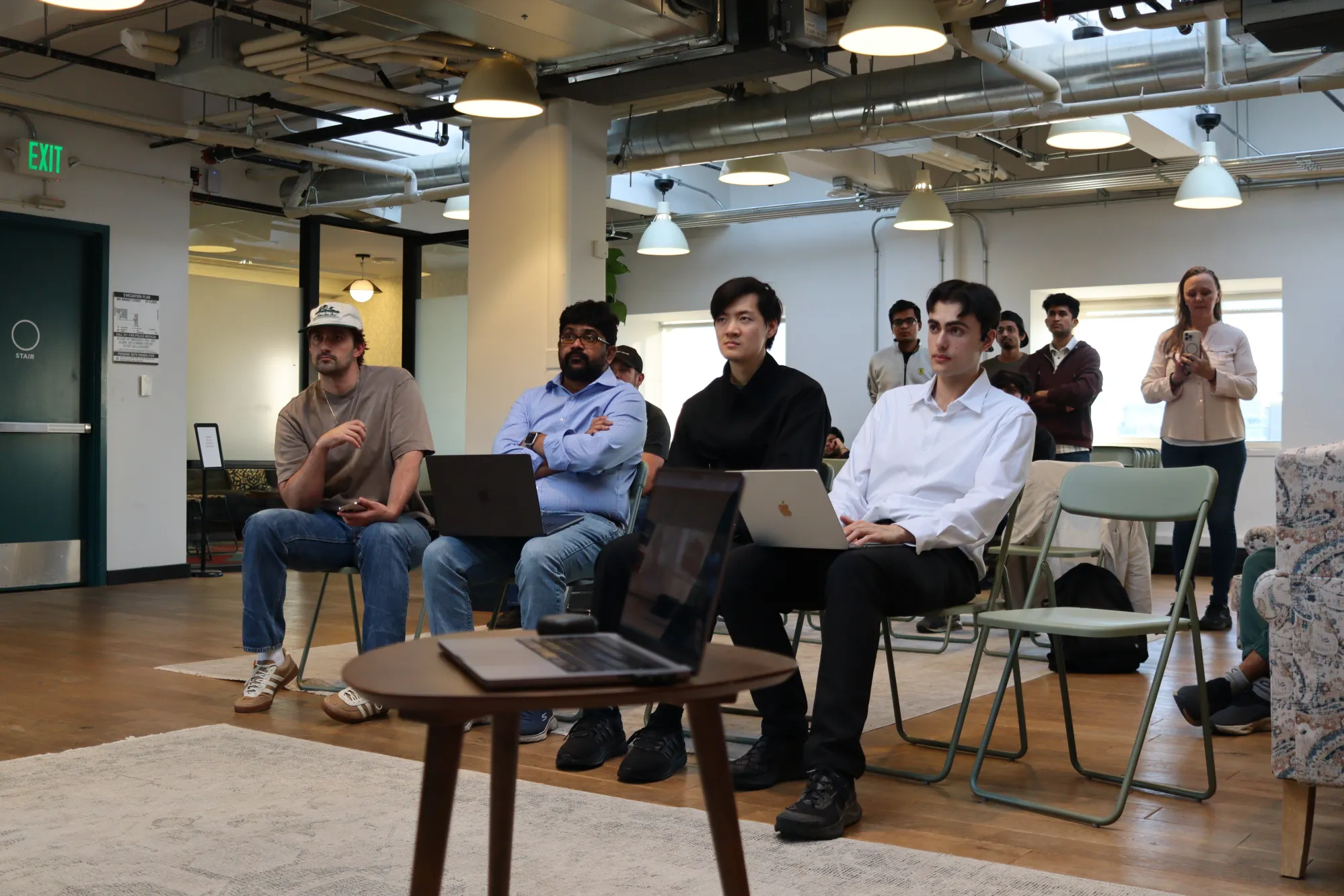
Judges and participants watching the live demos at the end of the day, Photo by Jim Chu
Most of us have had the same small hesitation. You want to ask an AI tool a real question, the kind that would actually help, but it would mean handing over something personal: your bank balance, a client list, a medical bill. So you ask a watered-down version, or you don’t ask at all. The help is right there, but getting it means risking your privacy.
That tension is one of the biggest reasons people hold back with AI. So I spent May 30th at a hackathon built entirely around solving it, and I came away more optimistic than I expected.
What the day was

Builders at work during the hackathon, Photo by Ashan Devine
The Krava × Linq Hackathon, organized by Jim Chu and Ashan Devine, gathered roughly a dozen builders for a single day of work that ended with live demos in the evening. The whole event was organized around one idea: AI you can use without giving up your privacy.
That idea comes from Krava, the platform everyone built on. The simplest way to describe it: when an app uses AI, your information normally has to be sent out to a big AI company to get an answer. Krava can keep it from leaving at all. Your question is handled by a model Krava runs itself, inside a sealed environment that no one, not even Krava, can see into, so your private details never reach an outside company in the first place. Most tools today ask you to trust a promise that your information is handled carefully. Krava’s pitch, which the judges kept returning to, is different: it is not that the company promises not to look, it is that the company technically cannot.
What people built
Eight projects took the stage, and it was great to see such a range of ideas.
Vault, the grand prize winner, is a personal finance dashboard with an AI advisor that actually knows your numbers. You connect your real accounts and ask plain questions about taxes, spending, or saving, all without pasting your bank balance into a public chatbot. It is for anyone who wants real financial help from AI without trading away their privacy to get it.
Paper Trail won the integration prize, the award for the best use of Linq, a service that lets a company put its AI assistant right inside your text messages, so you get help by text instead of through an app or a website. It solves a problem everyone recognizes: the deadlines buried in paperwork. You upload a bill, a lease, or a statement, and it pulls out every due date and texts you a reminder before each one. It is a quiet assistant for the kind of paperwork that is easy to lose track of.
Magpie, the runner-up, is a personal space for the things you are curious about. You drop in a topic and it hands back fresh angles, questions, and prompts to help you actually think about it, rather than just bookmarking it and moving on. It is built for people who collect ideas faster than they revisit them.
Capital Passport earned an honorable mention. It helps small business owners, especially in emerging markets, show their finances to a lender without handing over sensitive raw records. The owner chooses exactly what a lender sees, and gets a clear receipt of what was shared and what was kept private. It speaks to entrepreneurs who have strong numbers but very good reasons to guard the details.
Milo, which the judges singled out as one of the most compelling demos of the night, is a relationship coaching companion that remembers the people in your life. It helps founders and leaders work through difficult dynamics with partners, co-founders, and family, drawing on a growing memory of who those people are.
Source Shield is a safe way for a source to send a tip to a newsroom. It strips out identifying details so a journalist receives the substance of a story without ever seeing who sent it, which can be the difference between a source speaking up and staying silent.
Scout Quest AI wraps learning for young students inside an adventure game. Kids earn rewards as they finish lessons, while teachers get a clear view of where each child is doing well and where they need help. It is for classrooms that want learning to feel a little more like play.
Claire, my project
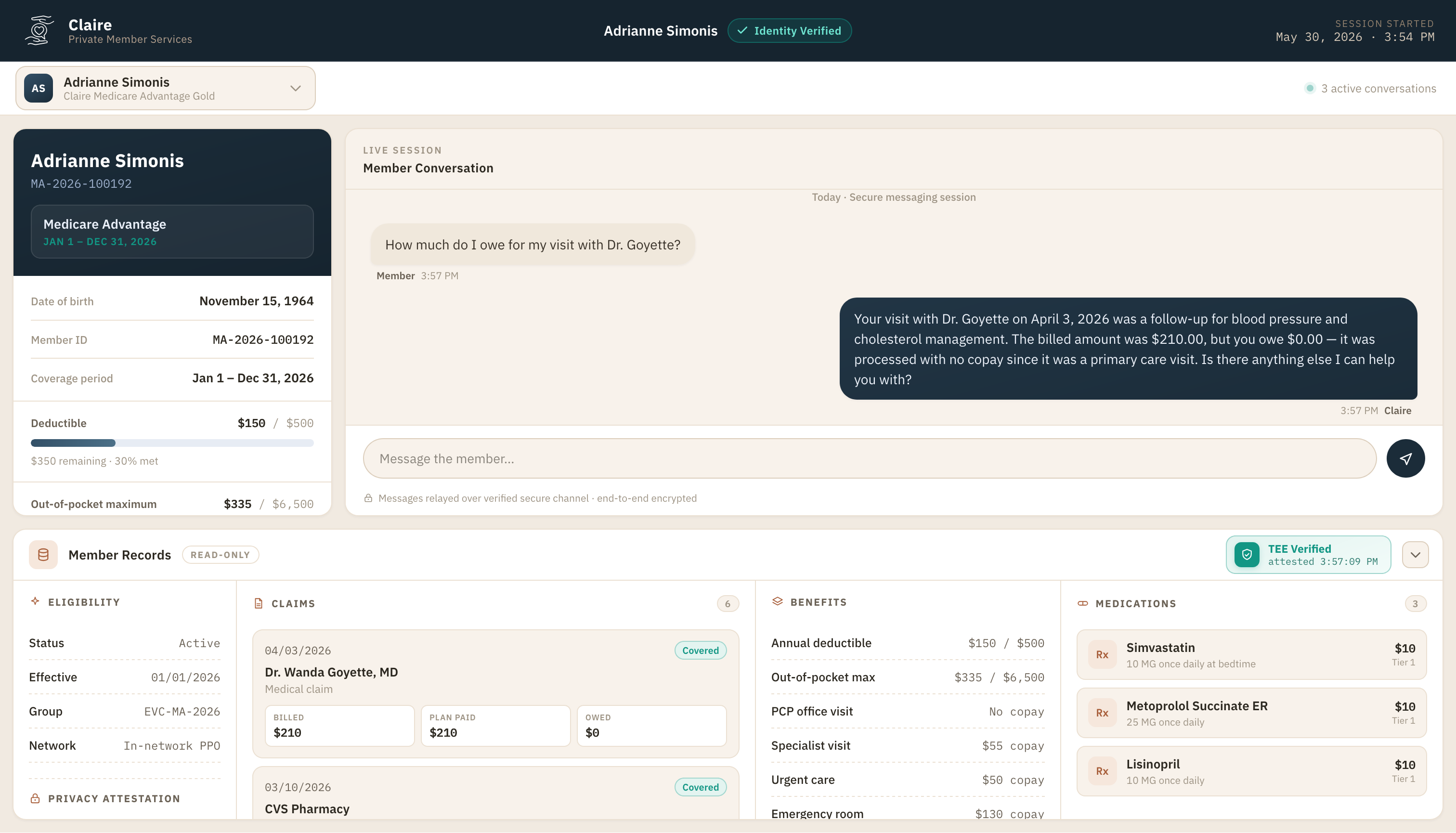
Claire autonomously handles a fictional member’s coverage question, with member information displayed for an optional human service rep to easily verify.
The eighth project was mine. Claire is a member services assistant for Medicare Advantage health plans. Anyone who has called their insurance company knows the routine: long holds, and answers wrapped in language you need a glossary to follow. Claire lets a member ask a plain question by text, things like “what is my deductible?” or “what is my copay for the ER?”, and get a short, plain answer pulled from their own plan information. Health data is about as sensitive as information gets, and plans are right to be cautious about exposing it to outside AI. A privacy layer like Krava’s is what makes the difference: a member gets a personalized answer without that information ever leaving a protected environment. Claire earned one of the strongest scores of the night on commercial viability.
Where this is headed
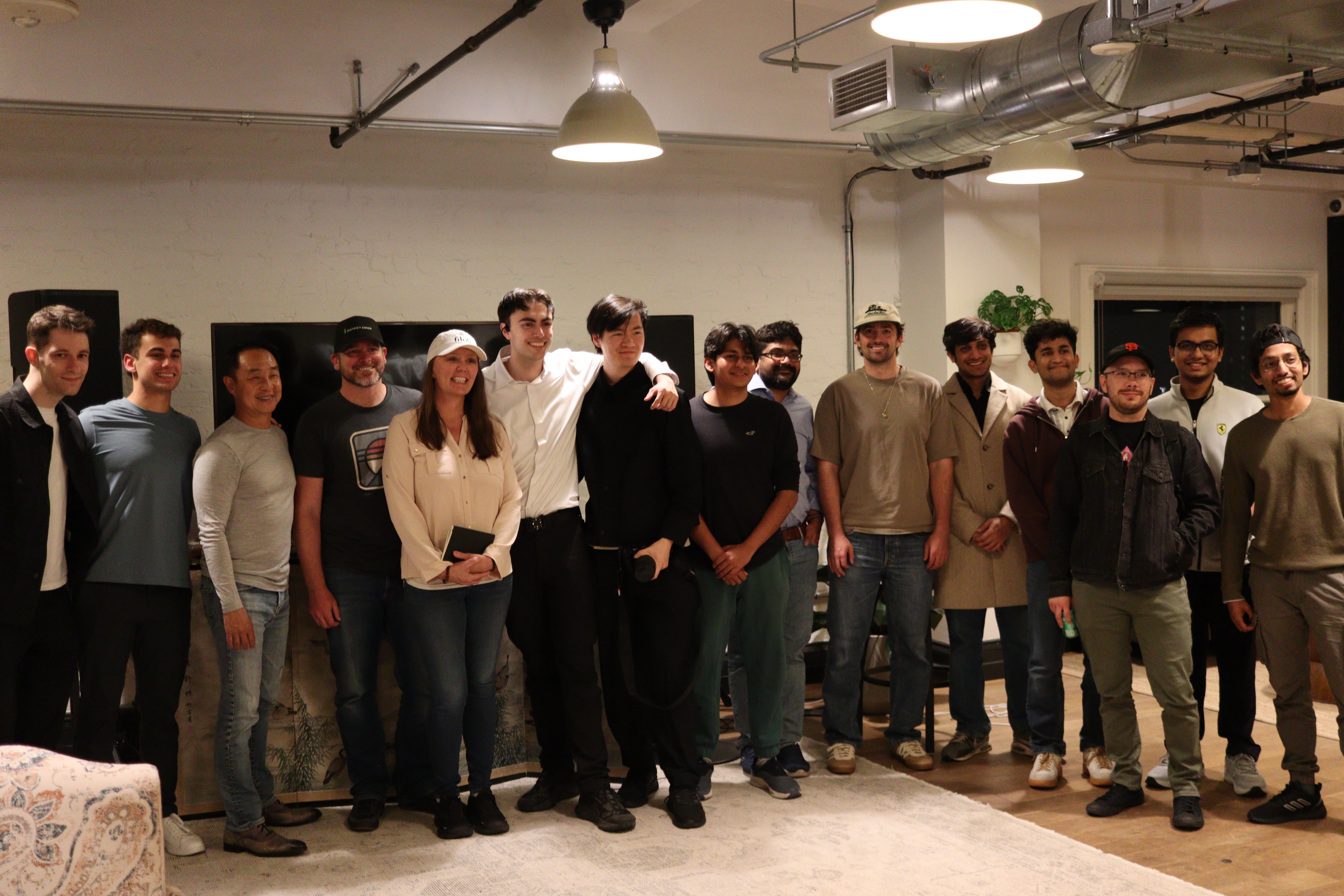
The group at the end of the night
When I talk with small business owners about AI, privacy is one of the first worries to come up. “I can’t put my customer data into a chatbot.” “I can’t share patient records.” “Our financials aren’t going anywhere near that.” Those are not excuses, they are legitimate concerns, and for a long time the worry was warranted. What this day showed me is that the ground is shifting. Seeing a room full of builders treat privacy as the foundation rather than an afterthought told me the barrier I hear about most is finally starting to come down.
A single day of building is a small sample, but it pointed somewhere clear: practical, privacy-respecting AI is closer than I thought. If you are curious how AI might fit your own business without having to give up control of your data, I would love to talk. Set up a call or email me.